How to prepare and organize a construction site efficiently ?
A well-organized construction site is safer, more productive and easier to control. Without clear planning, teams quickly face late deliveries, missing materials, blocked access routes, outdated drawings and slow decisions.
For a project manager, good organization is what keeps a construction project moving despite weather issues, design changes, supplier delays or subcontractor constraints.
It starts before work begins, with solid site preparation, clear documents, resource planning, safety measures, communication workflows and real time progress monitoring.
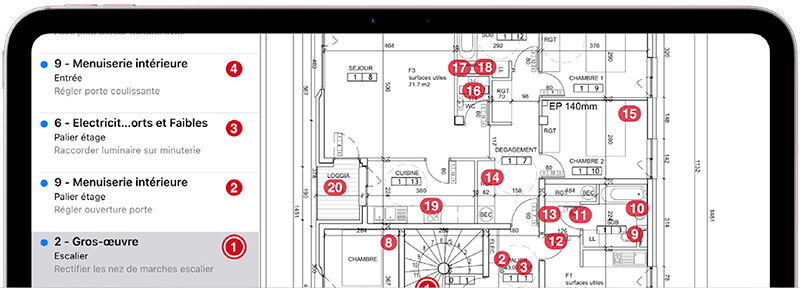
Plan your construction site more efficiently with Archipad’s planning feature.
Key takeaways :
Start with strong site preparation: scope, schedule, responsibilities, risks and access.
Prepare key documents: site layout plan, schedule, drawings, permits, safety plan and insurance.
Organize the site layout: access routes, storage zones, waste areas, equipment and emergency paths.
Coordinate workers, subcontractors, materials, deliveries, tools and equipment.
With Archipad, use clear reporting and real time site management to track progress and keep the construction project on track.
What does organizing a construction site mean?
Organizing a construction site means creating the right conditions for work to be completed safely, efficiently and in the right order.
It includes:
Planning the site layout
Defining access routes
Preparing key documents
Coordinating workers and subcontractors
Managing materials, tools and equipment
Setting safety rules
Tracking progress and reporting issues
The objective is simple: reduce uncertainty. Every stakeholder should know what needs to be done, who is responsible, where resources are located and how information is shared.
A well-organized site helps the project owner maintain visibility, allows subcontractors to work without unnecessary interruptions and gives the project manager a reliable framework for daily site management.
Start with proper site preparation
Good organization begins before the first team arrives on site. Strong site preparation reduces avoidable delays, safety risks and coordination problems.
Before work starts, the project manager should clarify:
Project scope
Budget
Timeline
Main deliverables
Technical constraints
Safety risks
Site access conditions
Storage capacity
Delivery constraints
The construction schedule should also be realistic. It must show not only key milestones, but also task sequencing, dependencies between trades, delivery dates and inspection points.
A site that has not been properly prepared often creates problems from day one. Teams arrive without clear instructions, materials are delivered to the wrong place, equipment is missing, and safety measures are improvised instead of planned.
Prepare the essential documents
Documentation is a major part of construction site organization. Without reliable documents, teams depend on emails, phone calls or assumptions, which increases the risk of mistakes.
The exact requirements depend on the country, contract and type of project, but most construction sites need the following documents.
Document | Purpose |
Site installation plan | Defines access routes, storage areas, waste zones and temporary facilities |
Construction schedule | Coordinates tasks, deadlines, deliveries and inspections |
Execution plans and drawings | Guides field teams and prevents technical errors |
Health and safety plan | Sets safety rules, PPE requirements and emergency procedures |
Permits and approvals | Confirms that work can legally begin |
Insurance certificates | Clarifies coverage and responsibilities |
Inspection reports | Tracks quality, compliance and progress |
These documents must be up to date, easy to access and shared with the right people. A document that exists but cannot be found on site is not useful.
Define roles and responsibilities clearly
A construction site runs better when everyone understands their role. Unclear responsibilities create duplicated tasks, missed approvals and unnecessary delays.
Stakeholder | Main responsibility |
Project owner | Defines objectives, budget and expected outcome |
Project manager | Coordinates planning, communication, reporting and progress |
Main contractor | Organizes execution, resources and subcontractors |
Subcontractors | Complete their specific scope of work |
Safety coordinator | Monitors risks, safety rules and compliance |
For complex projects, a responsibility matrix can help. For each key task, define who is responsible, who approves, who must be consulted and who needs to be informed.
This simple step improves accountability and prevents many coordination issues during the project.
How to organize a construction site in 7 steps
1. Confirm scope, schedule and risks
Before work begins, align all stakeholders on the project scope, deadlines, budget, responsibilities and main risks. This creates a shared baseline and avoids confusion later.
2. Create a clear site layout
The site layout should define:
Vehicle access and exit routes
Pedestrian walkways
Material storage zones
Equipment areas
Waste collection points
Temporary offices
Emergency access routes
Delivery zones
A good layout reduces unnecessary movement, prevents congestion and improves safety.
3. Plan workforce and subcontractors
Each team should know when they are expected, where they will work and what they need to complete. Too few workers create delays. Too many teams in the same area create congestion and conflicts.
The project manager must coordinate trades according to the construction schedule and adjust planning when conditions change.
4. Manage tools and equipment
Reliable tools and equipment are essential to productivity. Equipment should be available, inspected, maintained and assigned to the right tasks.
Track:
Equipment location
Availability
Maintenance dates
Inspection status
Usage needs by project phase
A missing machine or defective tool can delay several activities in a single day.
5. Coordinate materials and deliveries
Material planning has a direct impact on productivity. Ordering too late causes downtime. Ordering too early creates storage pressure and damage risks.
Deliveries should match actual site progress. When storage space is limited, Just-In-Time deliveries can help, but only if supplier communication is reliable.
For each delivery, check the quantity, references, condition, storage location and impact on the schedule.
6. Secure the site
Safety and organization go together. Access routes should be clearly marked, hazardous areas protected and emergency paths kept open.
The site should include:
Clear signage
PPE requirements
Visitor access rules
Waste disposal zones
Protected storage areas
Regular safety inspections
A safer construction site is also easier to manage.
7. Set up reporting and communication
Many delays come from poor communication, not technical issues. Define how information moves between the field and the office.
Clarify:
Who reports progress
Where observations are recorded
How issues are assigned
How photos and plans are shared
When site meetings take place
How reports are distributed
Clear reporting workflows help teams act faster and avoid repeated questions.
Construction site organization checklist
Use this checklist before work starts and review it regularly during the project, especially after schedule changes, design updates or unexpected delays.
Area | What to check |
Scope | Objectives, budget, timeline and deliverables are clear |
Responsibilities | Roles are defined for the project owner, project manager, contractor and subcontractors |
Documents | Plans, permits, schedule, safety documents and insurance certificates are available |
Site layout | Access routes, storage zones, waste areas and emergency access are planned |
Workforce | Teams and subcontractors are scheduled by project phase |
Tools and equipment | Equipment is available, inspected and assigned |
Materials | Deliveries, storage areas and supplier coordination are planned |
Safety | PPE, signage, visitor access rules and emergency procedures are in place |
Communication | Reporting workflows and issue tracking processes are defined |
Monitoring | Progress is tracked with reports, photos and field updates |
A checklist does not replace proper planning, but it gives the project manager a simple way to verify that the essential elements of construction site organization are under control.
Common mistakes to avoid
Even experienced teams can lose time because of avoidable organization mistakes.
Mistake | Consequence |
Starting without proper site preparation | Delays, confusion and safety risks |
Poor site layout | Congestion and blocked deliveries |
Outdated drawings | Rework and technical errors |
Weak material planning | Downtime or excessive stock |
Unclear responsibilities | Missed approvals and duplicated tasks |
Scattered communication | Slow decisions and repeated follow-ups |
Reactive monitoring | Problems are detected too late |
The solution is not to create complex processes. It is to build simple, repeatable workflows that teams can actually follow on site.
Keep the project on track with real-time site management
Once work begins, the project manager needs reliable field information to monitor progress and react quickly when plans change.
Real time site management helps teams:
Detect delays earlier
Assign corrective actions faster
Compare planned work with actual progress
Share updated information
Document key decisions and observations
Reduce reporting time
This is where construction management software makes a real difference. Instead of relying on paper documents, spreadsheets and scattered emails, teams can centralize plans, photos, observations, reports and tasks in one place.
How Archipad supports construction site organization
Archipad is a construction site monitoring software designed to help teams structure day-to-day site follow-up more efficiently.
For construction site organization, its most useful features include:
Plan and document management, so teams can access up-to-date project information from the field
Field observations with photos, to document issues, completed work or points requiring attention
Task tracking, to assign actions and follow pending items more clearly
Site reports, to summarize progress, decisions and observations after site meetings
By bringing these elements together, Archipad helps the project manager keep site information organized, easier to share and ready to use throughout the construction project.
Conclusion
Knowing how to organize a construction site means knowing how to control complexity.
A successful site is prepared, documented, coordinated and monitored. Teams understand their responsibilities, materials arrive when needed, tools and equipment are available, safety rules are clear and progress is followed in real time.
By investing in proper site preparation, clear communication and modern site management practices, construction professionals can reduce delays, improve productivity and keep every construction project on track from start to finish.
FAQ
1. How to layout a construction site?
Start by defining access routes for workers, vehicles and deliveries. Then organize storage areas, equipment zones, waste zones, temporary facilities, pedestrian walkways and emergency access.
2. What is the best way to organize a construction schedule?
Break the project into clear phases, then define task sequences, trade dependencies, milestones, delivery dates and inspection points.
The project manager should review the schedule regularly to compare planned work with actual progress and keep the construction project on track.
3. What is the most common contractor mistake?
The most common mistake is starting work without enough preparation. This often leads to missing documents, unclear responsibilities, poor material planning and delays.
4. What documents are needed before organizing a construction site?
Most projects require a site installation plan, construction schedule, execution drawings, health and safety plan, permits, approvals, insurance certificates and inspection documents.
These documents must be up to date, accessible and shared with the right people.
5. How can construction software help organize a construction site?
Construction software centralizes plans, photos, observations, reports and tasks in one place.
It helps project managers track progress, document field observations, assign actions, reduce manual reporting and support better real time site management.