Construction disputes can slow down work, damage relationships and create significant financial consequences. In the construction industry, disagreements over payment terms, delays, defects, contractual obligations or unclear responsibilities are common, especially when many parties are involved in a construction project.
This guide explains how to handle construction disputes with a practical, structured approach: review the construction contract, identify the root cause, document the facts, communicate clearly and choose the right dispute resolution process.
The goal is simple: help project managers resolve disputes more effectively while reducing the likelihood of future conflicts through stronger documentation, better risk management and clearer communication.
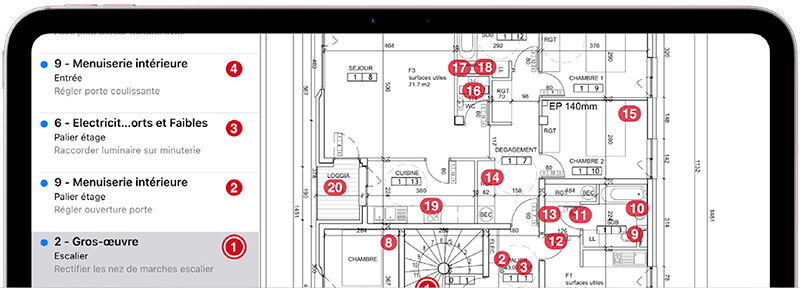
Prevent disputes with Archipad’s management of observations feature.
Key takeways
Most construction disputes come from unclear contracts, payment issues, delays, change orders or weak documentation.
Always start with the construction contract: check scope, obligations, payment terms, notice requirements and the dispute resolution process.
Document everything: photos, emails, meeting minutes, progress updates and daily reports help prove what happened.
Try negotiation first, then escalate to mediation, adjudication, arbitration or litigation if needed.
Prevention is best: clear expectations, reliable records, transparent communication and tools like Archipad reduce the likelihood of disputes.
What is a construction dispute?
A construction dispute is a disagreement between two or more parties involved in a construction project. It may concern the interpretation of a construction contract, payment terms, delays, quality of work, defects, site conditions, variations or the responsibilities of each stakeholder.
Disputes in construction often start with a practical problem rather than a legal battle. A contractor may claim extra payment for additional work. A client may refuse an invoice because the work is considered incomplete. A subcontractor may be delayed because information or materials were not available on time.
These issues become harder to resolve when there is no clear record of what happened. That is why project managers should treat early warning signs seriously. A disagreement that is clarified quickly may remain a manageable project issue. A disagreement that is ignored, poorly documented or emotionally handled can become a costly dispute.
Common causes of disputes in construction
Most construction disputes come from the same few problems: unclear contracts, payment disagreements, delays, change orders, poor communication and weak documentation.
Unclear contractual terms and obligations
The construction contract should give every party a clear reference point. Disputes often appear when contractual terms are vague, incomplete or interpreted differently.
Common contract-related causes include:
Unclear scope of work: one party may see a task as included, while another considers it additional work.
Vague contractual obligations: unclear responsibilities make it harder to know who must do what, and by when.
Poorly defined payment terms: unclear milestones, approval rules or retention conditions can create tension.
Weak change order procedures: undocumented variations often lead to disagreement over cost, timing or authorization.
Missing notice requirements: if formal notice deadlines are unclear or missed, claims may be harder to defend.
A clear construction contract does not remove every risk, but it gives the parties involved a stronger basis for resolving disputes.
Payment issues, delays and change orders
Payment, delays and changes are frequent sources of disputes in construction because they directly affect cost, cash flow and project delivery.
The most common causes include:
Late or unpaid invoices: delayed payments can create pressure for contractors, subcontractors and suppliers.
Disputed valuations: parties may disagree on the value of completed work or approved progress.
Schedule delays: weather, late design information, material shortages or poor coordination can affect the programme.
Unclear responsibility for delays: proving who caused the delay is often harder than identifying the delay itself.
Informal change orders: verbal instructions or undocumented changes can become serious issues if they affect cost, time or scope.
These risks are easier to manage when project managers keep accurate daily reports, photos, approvals and written records throughout the construction process.
Main types of construction disputes
Construction disputes can take different forms, but most fall into a few main categories.
Contract, payment, schedule and quality disputes
The most common types include:
Type of dispute | What it usually involves |
Contract disputes | Scope, contractual obligations, responsibilities or termination |
Payment disputes | Invoices, retention, valuations, variations or unpaid work |
Schedule disputes | Delays, extensions of time, disruption or penalties |
Quality disputes | Defects, incomplete work, poor workmanship or non-compliance |
Site condition disputes | Unexpected ground, access or environmental issues |
The right response depends on the type of dispute and the evidence available. A quality issue may require photos, inspection reports and specifications. A delay dispute may require schedules, daily reports and records of instructions. A payment dispute may depend on invoices, approvals and progress evidence.
In every case, facts matter more than opinions. Strong documentation makes it easier to understand the problem, support your position and reach a fair outcome.
How to handle construction disputes step by step
Knowing how to handle construction disputes does not mean escalating every issue immediately. The best approach is usually calm, structured and evidence-based.
1. Review the construction contract
Start by reviewing the construction contract before making or rejecting a claim. The goal is to understand the contractual terms that apply to the dispute and the procedure that must be followed.
Focus on:
scope of work;
contractual obligations;
payment terms;
change order procedures;
delay clauses;
notice requirements;
dispute resolution process.
This step matters because many contracts require formal notice within a specific timeframe. Missing that deadline can weaken your position, even when the issue itself is valid.
2. Identify the root cause and impact
Once the contract has been reviewed, identify the real cause of the dispute. Is it a payment issue, a delay, a defect, a design change, a missing approval or a coordination problem?
Then measure the impact on the project. Has the issue delayed the schedule, created additional costs, blocked another trade, caused rework or affected handover?
This helps project managers choose the right level of response. A minor misunderstanding may be solved through direct discussion, while a dispute with significant financial impact may require formal notice, expert input or a structured resolution process.
Be specific. Instead of writing “the subcontractor caused the delay,” document the planned date, the actual date, what prevented progress and how it affected the next stage of work.
3. Document facts with reports, photos and daily reports
Documentation is one of the strongest tools for handling construction disputes. When memories fade and opinions differ, written records create a reliable timeline.
Useful evidence may include:
contracts, drawings and specifications;
approved change orders;
emails and meeting minutes;
inspection reports and photos;
progress updates, snag lists and daily reports.
Daily reports are especially valuable because they show what happened on site day by day: weather conditions, workforce presence, completed work, equipment availability, delays, instructions, incidents and materials delivered.
Good documentation should be factual, dated, consistent, easy to retrieve and supported by photos or written records whenever possible. Strong records clarify responsibilities, support negotiation and reduce confusion.
4. Notify the other party formally
If the issue cannot be solved informally, notify the other party according to the construction contract. Many contracts require formal notice for delays, variations, claims, defects or payment issues.
A good formal notice should describe the issue, refer to the relevant contractual terms, explain the impact on time, cost or quality and request a clear response or action.
The tone should remain professional and factual. A notice is not a complaint. It is a structured communication that protects your position and gives the other party an opportunity to respond. It also creates a clear record if the dispute later moves to mediation, adjudication, arbitration or litigation.
5. Keep communication professional and factual
Many construction disputes escalate because communication becomes emotional or accusatory. Pressure is high, money is at stake and teams are often working under tight deadlines. But aggressive communication rarely helps.
Keep messages factual, specific and solution-oriented. Avoid personal criticism and focus on dates, documents, responsibilities and next steps.
For example, instead of writing:
“We are tired of your delays.”
Write:
“The revised drawings for zone B have not been received as of 12 March. This is affecting the planned start of electrical work scheduled for 14 March. Please confirm the expected delivery date.”
The second version is stronger because it identifies the fact, the impact and the action needed. Direct conversations can help reduce tension, but important decisions should always be confirmed in writing afterwards.
6. Choose the right dispute resolution process
If direct communication does not solve the issue, use the dispute resolution process set out in the contract. The right method depends on the value of the dispute, the urgency, the evidence and the importance of the business relationship.
Before escalating, consider:
the amount at stake;
the strength of your documentation;
the cost of the process;
the time needed to reach a decision;
whether the project is still ongoing;
whether the relationship between the parties involved should be preserved.
Litigation may be necessary in serious cases, but it is often expensive and time consuming. For many construction disputes, a more cost effective method may be more appropriate, especially when the goal is to keep the project moving.
Cost-effective dispute resolution methods
A good dispute strategy is not only about winning. It is about resolving disputes in a way that protects the project, controls costs and avoids unnecessary damage to business relationships.
Method | Best for | Main benefit |
Negotiation | Early-stage disagreements | Fast, direct and cost effective |
Mediation | Disputes where the relationship matters | Helps parties reach a compromise |
Expert determination | Technical or valuation issues | Uses specialist expertise |
Adjudication | Urgent payment or delay disputes | Can provide a quicker decision |
Arbitration | Complex private disputes | Formal and often binding |
Litigation | Serious legal conflicts | Court-enforced outcome |
Negotiation is usually the first option because it is flexible, direct and cost effective. If it fails, mediation can help the parties involved reach an agreement with the support of a neutral third party.
Expert determination may be useful for technical issues such as defects, valuation or compliance with specifications. Adjudication, arbitration and litigation are more formal options, generally used for urgent, complex or high-value disputes.
The best method is the one that fits the dispute, the contract and the commercial reality of the project.
How to prevent construction disputes before they escalate
Preventing disputes is always better than managing them after they have damaged the project. Prevention starts before work begins and continues throughout the construction process.
Strong risk management means identifying potential sources of conflict early: unclear scope, unrealistic schedules, weak payment terms, missing approvals, poor coordination or poorly defined responsibilities.
To reduce the likelihood of disputes, project managers should focus on three priorities:
First, clarify expectations early: the scope, programme, payment terms and responsibilities should be understood by all key stakeholders.
Second, document decisions consistently: every instruction, change, delay, defect or approval that affects the project should be recorded, especially when it changes time, cost or quality.
Third, keep communication transparent: information should circulate quickly between the parties involved. When people work from outdated information, disputes become more likely.
This approach does not eliminate every risk, but it gives the team the structure and evidence needed to respond quickly when issues arise.
How construction management software helps reduce disputes
Construction management software helps reduce disputes by improving documentation, communication and visibility throughout the construction process.
By centralizing reports, photos, observations, plans, tasks and meeting minutes, project managers can track what happened, when it happened, who was responsible and what actions were agreed.
Clear records do not replace a well-written construction contract or legal advice when a dispute becomes serious. But they give the parties involved a reliable basis for discussion. When information is factual, dated and easy to retrieve, disagreements are less likely to escalate.
How Archipad helps document and prevent construction disputes
Archipad helps project managers create a clearer record of the construction process. Site observations can be recorded during visits, photos can be attached to specific issues, and daily reports can show what happened on site over time.
This is useful when resolving disputes because teams can rely on concrete evidence instead of memory or scattered messages. Archipad can help document:
defects or incomplete work;
site observations and photos;
actions assigned to the parties involved;
progress updates and meeting points;
recurring issues affecting cost, quality or schedule.
By centralizing this information, Archipad helps construction teams clarify responsibilities, follow up on open items and reduce the likelihood of disputes before they become formal claims.
Conclusion
Construction disputes are easier to manage when teams act early, stay factual and rely on clear records. The stronger the contract, documentation and communication, the easier it is to protect the project and keep discussions constructive.
When prevention is not enough, the right dispute resolution process should match the value, urgency and complexity of the issue.
FAQ
1. How to resolve disputes in construction?
Review the construction contract, identify the issue and gather evidence such as photos, emails, meeting minutes and daily reports. Then try negotiation first.
If discussion fails, follow the contract’s dispute resolution process, such as mediation, adjudication, arbitration or litigation.
2. How to handle a dispute with a contractor?
Stay factual. Review the scope of work, contractual obligations, payment terms and written instructions linked to the issue.
Document the problem with dates, photos and reports, then contact the contractor professionally. If needed, use the formal notice procedure in the construction contract.
3. What is the most used method for dispute settlement in construction project?
Negotiation is often the first method used because it is direct, flexible and cost effective.
If negotiation fails, mediation is often the next step. Complex or high-value disputes may require adjudication, arbitration or litigation.
4. How to avoid disputes in construction?
Define the scope of work, payment terms, responsibilities, deadlines and change order procedures before work starts.
During the project, keep accurate daily reports, document decisions and make sure all parties involved work from the same up-to-date information.
5. What is the protocol for construction disputes?
Start by reviewing the construction contract and checking notice requirements.
Then document the facts, notify the other party if required, try negotiation and escalate only if necessary.